Amulet Skateboards Cairo’s Premier shop
Yehia Ossama: Skater, Painter, Teacher, Community Builder
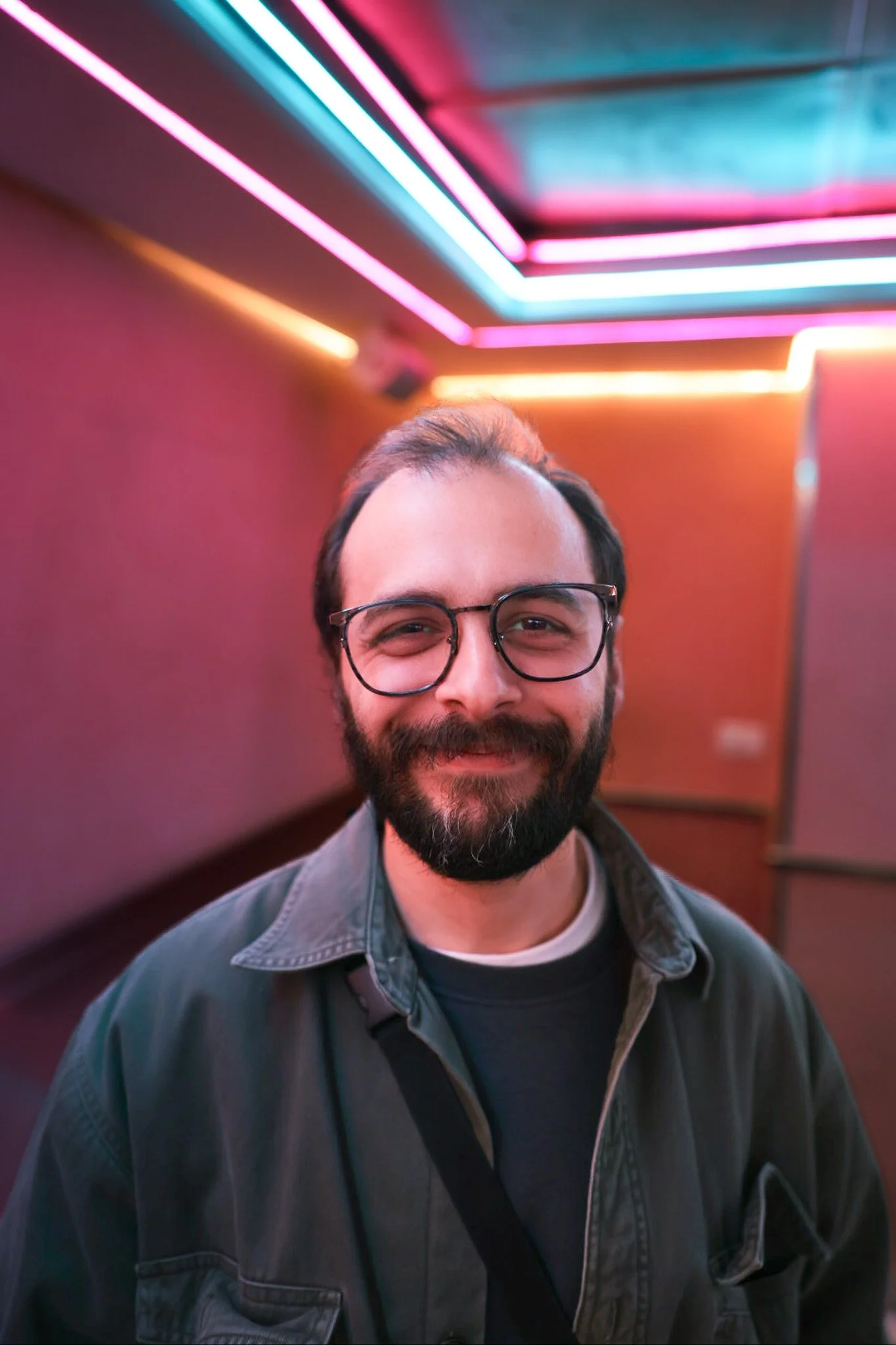
Yehia Ossama is a 39‑year‑old skater, surrealist painter, and art teacher based in Cairo, Egypt. His paintings draw from neuroscience, psychology, and the natural world, and if I had to describe his work in one word, it would be ethereal. He’s also one of the founders of Cairo’s skate scene and a partner in Amulet Skateboards, one of only three skate shops in Egypt.
We first connected over one of his paintings that reminded me of a photo I took in Cairo in 2023. After a short conversation about my trip, he became one of those rare people who immediately opens doors — graciously connecting me to others in the scene and helping me understand the city from the inside.
After a long day shooting promo photos for a band, we met at a restaurant in Heliopolis called Pablo and Abdo’s. The place feels like something out of Grand Theft Auto — an Egyptian‑American‑Mexican diner drenched in neon pink and teal light. It’s surreal in the same way Yehia’s paintings are surreal: familiar shapes, unfamiliar atmosphere.
The first thing you notice about Yehia is the quiet confidence he carries. He has a way of putting people at ease almost instantly. He’s humble about his work, too — refreshingly so for someone who has exhibited in the UAE, Japan, and the U.S. As he showed me his studio, we talked about the craftsmanship behind modern abstract art, the hype machine that surrounds it, and the moment an artist stops being a person and starts being a “brand.”
He put it simply:
“When the money comes and your ego isn’t checked, it plays games on you. You start thinking you’re entitled to a six‑figure paycheck. But in reality…it’s just you, some brushes, and a little bit of paint.”
After dinner, we walked across the street to his studio — the place where he often spends 12 to 14 hours a day. When he opened the door, he whispered, “Assalamu alaikum.” I asked what he said, and he replied, “In Islam, when you enter your house, you should spread peace.”
That moment told me everything I needed to know about him.
Beneath his calm exterior is someone who has spent years thinking deeply about what matters — in life and in art. When I asked how he titles his paintings, he laughed and said he tries not to name anything. He wants people to find their own meaning. It reminded me of musicians who refuse to explain their lyrics — the best ones trust the listener to meet the work halfway. If a painting connects with someone, it has done its job. If not, he simply recycles it.
Nearly two decades into both painting and skating, Yehia is an expert in each craft — but he wears that expertise lightly.
His philosophy in the studio carries into his work with Amulet Skateshop. He and his partner, Hani Talat, share the same goal of growing skateboarding in Egypt, but they approach it from different angles. Hani is the engine — branding, events, outreach. Yehia is the grounding force — the nurturer, the cultural compass. Together, they encourage young women to skate, which is still unusual in Egypt, and they try to build the sport in a way that feels equitable and respectful.
When our conversation shifted toward skateboarding, I asked him what the biggest challenge is in growing the sport in Cairo.
“We’re trying to create a movement of skateboarding here in Egypt,” he said. “There’s a certain type of appropriation that needs to happen for society to accept it. The individualist format of skateboarding doesn’t translate here. If it starts there, we lose the battle for legitimacy before it even begins.”
Egyptians, he explained, often struggle to accept new things — sometimes reacting with hostility. It’s not hard to understand why. Egypt sits in a politically complicated position: culturally tied to its Arab neighbors, historically scarred by occupation, and strategically entangled with global powers. One friend told me, “Egypt exists on its knees, bowing to both sides,” which feels tragic for a place where multiple religions and cultures have coexisted for thousands of years.
Egyptian culture is rooted in tradition, strong family values, and looking out for the people around you. As an American, this stands in sharp contrast to the hyper‑individualism I grew up with. And yet that’s exactly where Yehia and Hani find themselves — trying to translate the best parts of skateboarding (perseverance, discipline, resilience) into a culture that values social cohesion over standing out.
“For the sport to grow,” Yehia said, “families need to see proper role models. They need to say, ‘We’d like our kid to look up to that guy one day.’”
Standing out isn’t what Egypt needs. Belonging is.
In my travels there, I’ve been invited to tea by strangers more times than I can count. It’s always sincere — an act meant to bring people together. It’s the opposite of the “be different, be bold, be you” messaging that multi‑million‑dollar skate brands push every day.
Since its formation in 2022, Amulet has hosted countless skate demos and even put on an art exhibition about the history of skateboarding in Egypt. Their events draw kids of all ages and backgrounds. They’ve partnered with working‑class brands like Real Skateboards, Thunder Trucks, and Carhartt — companies whose values align with their own humble roots.
And that’s the challenge Yehia is wrestling with:
What does it mean to build a community for a sport in a place that doesn’t trust the culture that created it?
How do you embrace the parts of skateboarding that matter — the discipline, the creativity, the resilience — without importing the ego, the branding, and the individualism that don’t?
Yehia doesn’t have all the answers. But he’s doing the work — in the studio, in the skatepark, and in the community he’s helping build. And in a city as old, complicated, and beautiful as Cairo, that work matters.Ambassdors
