Hani Talat & the Magic of Cairo Skateboarding
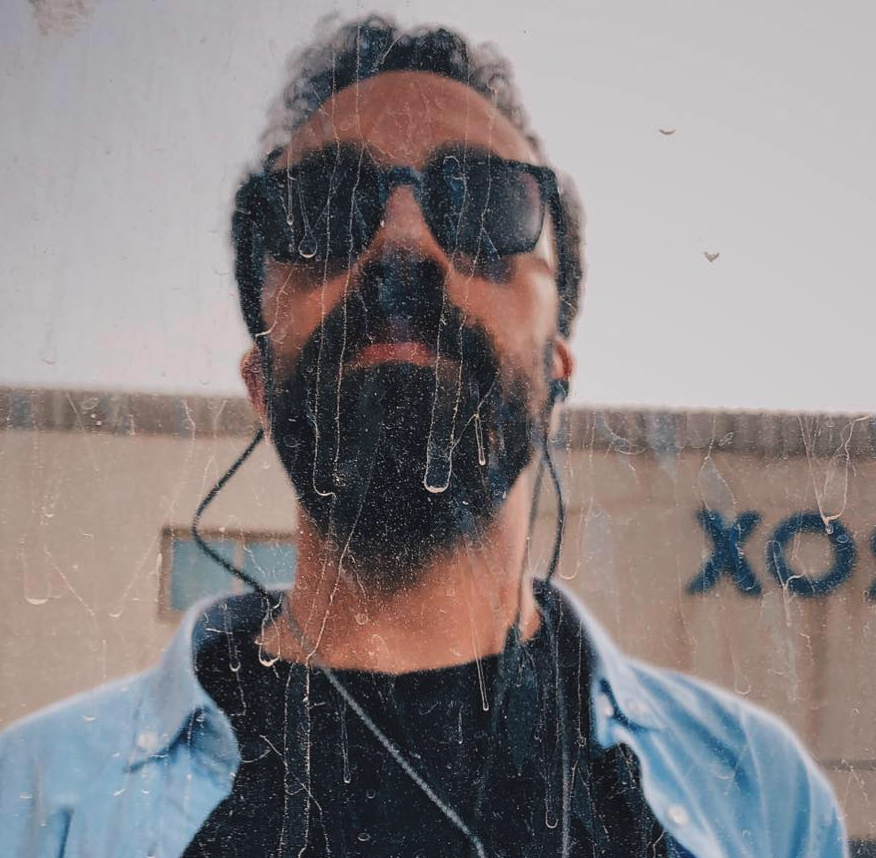
Hani Talat.
Owner of Amulet Skateboards, Cairo Egypt.
Hani Talat: Skater, Filmmaker, The Guy Who Picked Up the Camera
If you read the Amulet Skateboards post, you've met Hani Talat — or at least the outline of him. He's Yehia's partner. The engine: branding, events, outreach. What that description doesn't quite capture is that he can do a pitch-perfect impression of an entitled American skater.
There's something oddly comforting about hearing a native Arabic speaker drop the word "Dude" with dead-on Midwestern flatness. It's hilarious. It also tells you something about how deeply skate culture travels, mutates, and embeds itself in people's lives far from where it started.
Hani grew up on the same videos many of us did — Chocolate, Lakai, the whole canon. Those videos didn't just make him want to skate. They made him want to pick up a camera.
The pipeline is recognizable once you see it. Jason Lee skated for H-Street, ended up in Chasing Amy, landed the lead in My Name Is Earl, and now spends his time documenting the decline of the American Midwest. It's not a straight line, but it's consistent: skate → camera → culture → story. Hani followed his own version of it. He's shot promotional videos and managed events for Carhartt, Polar, and Real. More importantly, he's become the person responsible for documenting the Cairo skate scene — preserving its history for the community that's still building it.
He's the one who made sure the world knew about Mo Kamel. That Cairo had an OG who'd been skating since the '70s. Without someone pointing a camera at that, it disappears.
Egypt's skate scene, as Hani knows it, revolves around a handful of spots. Royal House, outside a grocery store. EGY Skatepark, so far out in the suburbs it's not a realistic meeting point for most people.
That's basically it.
"If you don't have a skate park," he said, "you don't have a place that brings everyone together."
It sounds simple. It isn't. Skateparks aren't just concrete — they're where a kid first sees someone land something they didn't think was possible. Where a beginner meets someone who's been doing it for twenty years. Where a scene becomes a scene instead of a handful of people who happen to own boards. Without that physical home, everything stays scattered. Nothing compounds.
Amulet opened in 2022. Their first shipment of decks was already on the way when the U.S. dollar collapsed against the Egyptian pound. Overnight, the cost of that shipment jumped by nearly fifty percent.
They could pass it on to the kids or eat it.
They ate it.
"What's the point of a skate shop with no skateboards?"
Amulet is one of maybe three or four places in a country of ninety million people where you can walk in and buy a skateboard. No Zumiez. No mall pipeline. No algorithm sending new skaters through the door. Every kid who finds it has found it through someone else who found it first — a borrowed board, an older skater, a video on a phone.
Hani films those kids. He's been doing it long enough to see what the footage actually does — it gives them proof. That what they're doing is real. That it existed before them and will exist after. That it matters somewhere beyond the street corner where they're practicing it.
Without a park, everything in Cairo becomes harder to learn and higher risk. Fundamentals that should happen on forgiving concrete happen instead on uneven sidewalks and improvised spots. But the kids still show up. They still film each other. They still post it.
Hani lived both sides of that. He was the kid watching Chocolate videos in Cairo. Now he's the one behind the camera, making the videos that the next kid will watch.
Whatever the Egyptian skate scene becomes, someone will be able to go back and see how it started.
That's the job he picked up. Whether it was the plan from the beginning, he didn't say.
Hani Talat's work can be found on Instagram. Amulet Skateboards is one of three skate shops in Egypt.
